
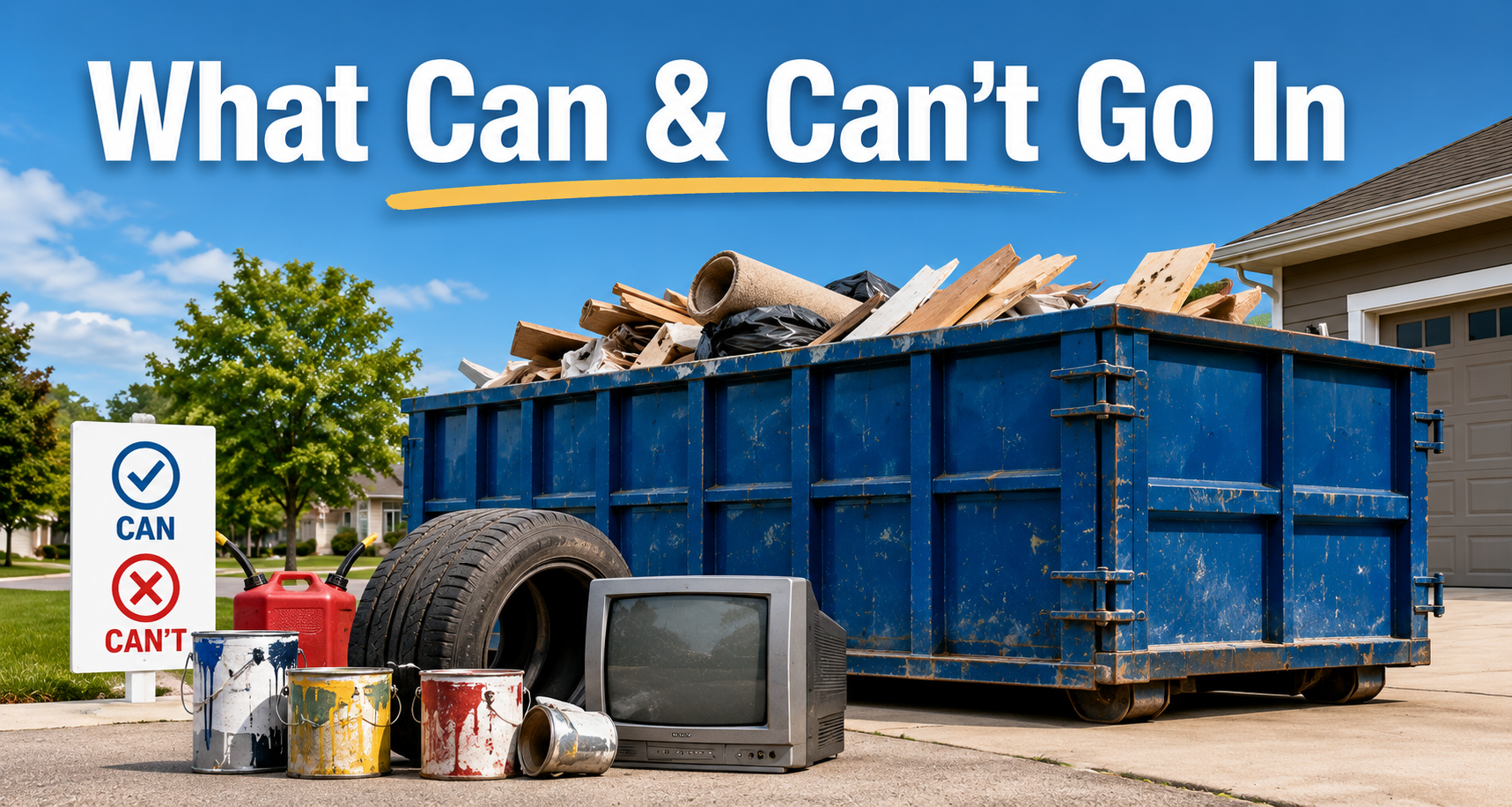

A roll-off dumpster handles the vast majority of household, renovation, and construction waste — but a short list of items is never allowed, and tossing them in can mean rejected pickups, extra fees, and even fines. Knowing the difference before your dumpster arrives keeps your project moving and your final bill exactly as quoted.
At Dump IT LLC, we deliver roll-off dumpsters across Indianapolis and the surrounding areas every day, and one of the most common questions homeowners and contractors ask is what they’re actually allowed to throw away. This guide to prohibited items in roll-off dumpsters lays out exactly what’s accepted, what’s banned, and why — so you can load with confidence and avoid surprises on pickup day.
Below, we’ll cover the everyday materials you can toss freely, the items that are strictly off-limits, the reasons behind the rules, and how to dispose of restricted materials the right way.
Most Everyday Junk and Renovation Debris Is Accepted in a Roll-Off Dumpster
Contents
- 1 Most Everyday Junk and Renovation Debris Is Accepted in a Roll-Off Dumpster
- 2 These Prohibited Items Should Never Go in a Roll-Off Dumpster
- 3 Why Are Certain Items Banned from Dumpsters?
- 4 Hazardous Materials Require Special Disposal
- 5 What Happens If You Put Prohibited Items in a Dumpster?
- 6 Plan Your Load to Avoid Fees and Delays
- 7 Frequently Asked Questions About Dumpster-Prohibited Items
- 8 Know Before You Throw for a Smoother Cleanup
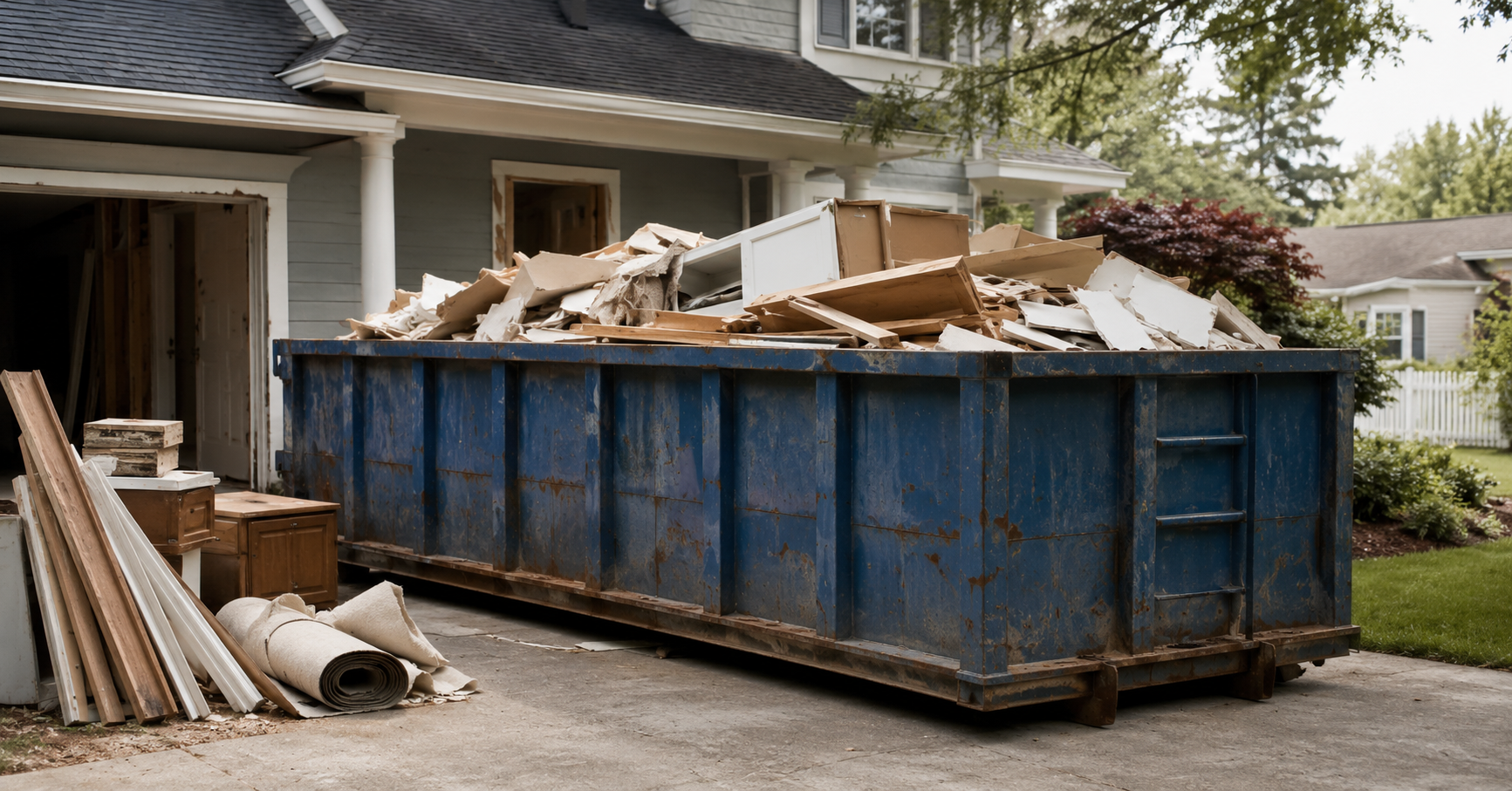
The good news is that roll-off dumpsters accept the large majority of non-hazardous waste from homes and job sites. If it’s a common building material, household item, or piece of furniture that isn’t toxic, flammable, or specially regulated, it almost certainly belongs in the dumpster.
Materials our Indianapolis customers regularly and safely dispose of include:
- Construction and renovation debris — drywall, lumber, wood, plaster, and insulation
- Flooring and fixtures — carpet, tile, hardwood, cabinetry, and countertops
- Household junk — furniture, mattresses, clothing, toys, and general clutter
- Yard waste — branches, leaves, brush, and small stumps (where local rules allow)
- Heavy materials — concrete, brick, asphalt, and dirt (often best in a smaller dumpster due to weight)
- Non-Freon appliances — stoves, dishwashers, washers, and dryers
If you have a large volume of dense material like concrete or dirt, let us know when you book — these items have weight limits, and we can recommend the right size to keep you under them.
These Prohibited Items Should Never Go in a Roll-Off Dumpster
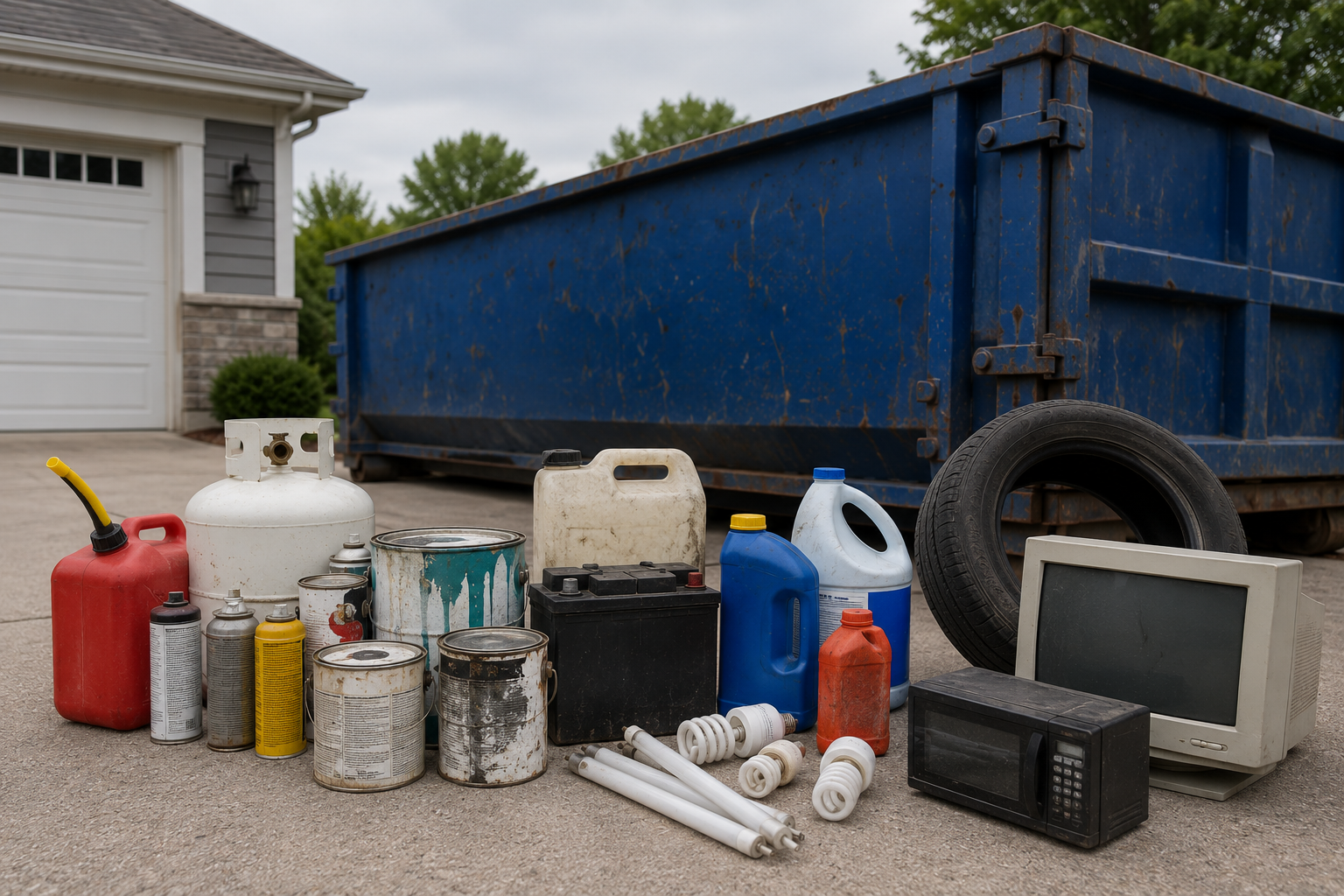
Certain items are banned from every roll-off dumpster because they’re hazardous, environmentally harmful, or regulated by law. These can’t be hauled to a standard landfill, and including them can lead to a refused pickup or added disposal charges.
The table below summarizes the most common accepted versus prohibited materials at a glance.
| Generally Accepted | Prohibited |
|---|---|
| Wood, drywall, and lumber | Paint, stains, and solvents |
| Furniture and mattresses | Motor oil, fuel, and antifreeze |
| Carpet, tile, and flooring | Tires |
| Concrete, brick, and dirt | Batteries (car and household) |
| Non-Freon appliances | Refrigerators, AC units, and other Freon appliances |
| General household junk | Electronics and televisions (in many areas) |
| Yard waste and brush | Asbestos, chemicals, and medical waste |
Rules can vary slightly by location and material weight, so when in doubt about a specific item, it’s always worth a quick call before you toss it.
Why Are Certain Items Banned from Dumpsters?
Items are banned from roll-off dumpsters primarily because they pose risks to safety, health, or the environment that a standard landfill isn’t equipped to handle. The rules aren’t arbitrary — they trace back to federal and state regulations on how hazardous and recyclable materials must be processed.
The main reasons an item ends up on the prohibited list include:
- Environmental contamination — chemicals, oil, and paint can leach into soil and groundwater.
- Fire and explosion risk — fuels, propane tanks, and aerosols are dangerous to compact and transport.
- Toxic emissions — Freon from refrigerators and AC units must be professionally recovered.
- Regulatory requirements — tires, batteries, and electronics are often required to be recycled separately by law.
Because landfills will reject loads containing these materials, hauling companies pass that responsibility on to renters — which is why a single prohibited item can hold up an entire pickup.
Hazardous Materials Require Special Disposal
Hazardous household and construction materials must be disposed of through dedicated programs rather than a roll-off dumpster. Indianapolis-area residents have several safe, often free options for getting rid of these items the right way.
Here’s how to handle the most common restricted materials:
- Paint and chemicals — dry out latex paint or take oil-based paint and solvents to a household hazardous waste drop-off.
- Tires — return them to a tire retailer or a designated recycling center, which often accept them for a small fee.
- Batteries — drop car and household batteries at auto-parts stores or recycling points that accept them.
- Electronics — use an e-waste recycler or retailer take-back program for TVs, computers, and monitors.
- Freon appliances — schedule a specialized pickup where the refrigerant is professionally recovered before disposal.
If you’re unsure where an item belongs, our team is glad to point you toward the right local resource when you book your dumpster.
What Happens If You Put Prohibited Items in a Dumpster?
Placing prohibited items in a roll-off dumpster can result in a refused pickup, additional fees, or in some cases fines passed down from the landfill. Because the hauler is responsible for what reaches the disposal site, those costs typically fall to the renter.
The most common consequences are straightforward: the driver may be unable to haul the load until the banned items are removed, the landfill may charge a special handling fee for contaminated loads, and your project timeline can slip while the issue gets sorted out. The simplest way to avoid all of it is to keep prohibited materials out from the start — and to ask first whenever you’re not sure.
Plan Your Load to Avoid Fees and Delays
A little planning before the dumpster arrives is the best way to keep your rental affordable and your pickup on schedule. Most overage charges and rejected hauls come down to two avoidable issues: prohibited items and overfilling.
Follow these tips from our crews for a smooth, fee-free rental:
- Set aside hazardous items in advance so they don’t accidentally end up in the load.
- Keep all debris level with or below the top fill line — material can’t stick out above the rails.
- Break down bulky items to use space efficiently and avoid needing a larger size.
- Separate heavy materials like concrete and dirt, which may need a dedicated smaller dumpster for weight reasons.
- Ask before tossing anything you’re unsure about — a quick question is cheaper than a rejected pickup.
With transparent, upfront pricing and no hidden fees, Dump IT LLC makes it easy to know your cost in advance — and loading the right way keeps that number exactly where it should be.
Frequently Asked Questions About Dumpster-Prohibited Items
Can you put a mattress in a roll-off dumpster?
In most cases, yes — mattresses are accepted in roll-off dumpsters, though some areas charge a small additional fee or have recycling requirements. It’s worth confirming when you book, since rules vary by location. Our team can let you know how mattresses are handled in your area.
Can I throw away a refrigerator or air conditioner?
Refrigerators, freezers, and air conditioners that contain Freon cannot go in a standard dumpster because the refrigerant must be professionally recovered first. Once the Freon is removed and certified, the unit can often be disposed of normally. We can guide you to the right service for these appliances.
Are electronics and TVs allowed in a dumpster?
In many areas, electronics and televisions are prohibited from landfills and must be recycled through an e-waste program instead. This is due to the hazardous components and recyclable metals inside them. Check with us or a local e-waste recycler before placing them in your dumpster.
What should I do with leftover paint?
Leftover paint can’t go in a dumpster while it’s still liquid. Latex paint can often be dried out with kitty litter or a paint hardener and then disposed of, while oil-based paint should go to a household hazardous waste facility. Never pour paint down a drain or onto the ground.
Can I put tires in a roll-off dumpster?
Tires are prohibited from roll-off dumpsters in nearly all areas because they’re regulated for separate recycling. Most tire retailers and recycling centers accept old tires, often for a small per-tire fee. Setting them aside keeps your dumpster load compliant and your pickup on schedule.
Know Before You Throw for a Smoother Cleanup
Understanding what can and cannot go in a roll-off dumpster turns a potentially frustrating cleanup into a simple one. Most everyday junk, renovation debris, and non-Freon appliances are fair game, while hazardous materials, tires, batteries, electronics, and Freon appliances need dedicated disposal. When you’re unsure about an item, asking first is always the cheapest move.
Ready to clear out your home, job site, or renovation? Dump IT LLC offers same-day roll-off dumpster rentals, easy online booking, and transparent pricing throughout Indianapolis and the surrounding areas. Tell us what you’re tossing and we’ll help you choose the right size and load it the right way — so your cleanup stays fast, affordable, and hassle-free.
Comments are closed.