


Key Takeaways
Contents
- 1 Key Takeaways
- 2 Understanding R-Value and Its Importance for Home Insulation
- 3 Factors Affecting the Best R-Value for Indiana Homes
- 4 Recommended R-Values for Different Areas of Indiana Homes
- 5 Common Insulation Materials and Their R-Values
- 6 Cost vs. Performance: Evaluating Your Insulation Options
- 7 Benefits of Achieving Optimal R-Value
- 8 Conclusion
- 9 FAQS
- 9.1 What is the best R-value for properly insulating homes in Indiana to keep them warm during winter?
- 9.2 How does the R-value help determine the effectiveness of attic insulation for homes in Indiana?
- 9.3 What are the recommended R-value ranges for attic insulation in Indiana homes?
- 9.4 What is the optimal R-value for ceiling insulation in Indiana homes to ensure energy efficiency?
- 9.5 What is the recommended R-value range for ceiling insulation in Indiana homes to optimize energy efficiency?
- 9.6 What R-value range should homeowners in Indiana aim for when insulating their ceilings to ensure optimal energy efficiency?
- 9.7 What R-value should be targeted for ceiling insulation in Indiana homes to achieve maximum energy efficiency?
- 9.8 What R-value should be targeted for ceiling insulation in homes located in Indiana to achieve better energy performance?
- 9.9 What is the ideal R-value for ceiling insulation in Indiana homes to maximize energy efficiency?
- 9.10 What R-value should homeowners in Indiana consider when selecting ceiling insulation to enhance their home’s energy performance?
- Comprehending R-Value and Its Significance for Home Insulation
- Elements Influencing the Ideal R-Value for Indiana Residences
- Suggested R-Values for Various Regions of Indiana Dwellings
- Typical Insulation Materials and Their R-Values
- Expense vs. Efficiency: Assessing Your Insulation Choices
- Advantages of Attaining Optimal R-Value
Understanding R-Value and Its Importance for Home Insulation
R-Value is a crucial metric that measures the thermal resistance of insulation materials, indicating their effectiveness in preventing heat transfer. For homeowners in Indiana, especially those in northern Indiana, understanding and achieving the best R-Value for Indiana homes is essential for energy efficiency and comfort. Different types of insulation offer varying R-values, making it important to select the right material for specific areas of the home. High R-values contribute to better insulation performance, which directly influences energy bills and indoor temperatures throughout the seasons. Therefore, selecting insulation that provides optimal R-values can significantly enhance the overall efficiency of a home in Indiana.
Definition of R-Value
R-Value is a measure that indicates the insulating effectiveness of materials used in home construction. This rating reflects the resistance to heat flow, with higher values signifying better insulation performance. Homeowners seeking the best R-Value for Indiana homes should consider the insulation R-Value in various areas including walls, attics, and roofing. Understanding this metric is essential during home remodeling projects, as it influences energy efficiency and comfort levels.
U-value is another important metric that measures how well building materials conduct heat, which complements the R-Value assessment. While R-Value focuses on resistance to heat flow, U-value emphasizes the rate of heat transfer. For optimal energy performance in Indiana homes, homeowners must balance both values during insulation selection to achieve the best R-Value for Indiana homes. Selecting appropriate insulation materials can significantly impact energy costs and overall living comfort.
How R-Value Affects Energy Efficiency
R-Value plays a crucial role in determining the energy efficiency of a home. It measures the effectiveness of insulation in resisting heat flow. Higher R-Values indicate better insulation performance, which is essential for maintaining comfortable indoor temperatures throughout the year. For homeowners seeking the best R-Value for Indiana homes, understanding the recommended R-Value for different areas of the house is vital. The ideal R-Value varies based on climate conditions and specific design features, ensuring that a home remains energy efficient while minimizing heating and cooling costs.
Achieving the best R-Value for Indiana homes contributes significantly to overall energy efficiency. Proper insulation helps reduce the workload on heating and cooling systems, leading to lower energy bills over time. Choosing insulation with an optimal R-Value allows homeowners to create a more comfortable living environment while being mindful of energy consumption. As energy prices fluctuate, having the right insulation in place ultimately leads to considerable long-term savings and enhances the home’s sustainability.
| Area of Home | Recommended R-Value | Insulation Type |
|---|---|---|
| Attic | R-38 to R-60 | Fiberglass, Cellulose |
| Walls | R-13 to R-21 | Fiberglass, Foam Board |
| Basement | R-15 to R-19 | Spray Foam, Rigid Foam |
| Floors | R-19 to R-30 | Fiberglass Batt, Rigid Foam |
Factors Affecting the Best R-Value for Indiana Homes
Climate considerations play a vital role in determining the best R-Value for Indiana homes. The region experiences a diverse range of temperatures, necessitating insulation that meets specific R-value requirements for effective energy efficiency. Home design also significantly impacts insulation choices; for instance, attics and walls may require different approaches to achieve the recommended R-values. Understanding these factors ensures that homeowners can select materials with a high R-Value that align with their energy efficiency goals while effectively addressing local climate conditions. This tailored approach ultimately leads to the best R-Value for Indiana homes, promoting optimal comfort and cost savings.
Climate Considerations in Indiana
Indiana experiences a diverse climate with hot summers and cold winters, making it essential to address the best R-Value for Indiana homes. The varying temperatures affect heating and cooling demands throughout the year. Homeowners need to follow R-value requirements set for different areas to ensure optimal comfort and energy efficiency. Understanding the insulation R-value mean across Indiana is crucial for selecting the right materials to meet these seasonal challenges.
Minimum insulation R-values are established based on climate zones in Indiana, influencing the type and thickness of insulation used in homes. Achieving the best R-Value for Indiana homes not only improves energy efficiency but also enhances indoor air quality. Homeowners should assess their insulation strategies to comply with local building codes while aiming for a proper balance between cost and performance.
- Understand the climate zone your home is located in to determine the appropriate R-value.
- Choose insulation materials with high R-values for maximum energy efficiency.
- Consider adding insulation in attics, walls, and floors to enhance overall performance.
- Regularly check for air leaks and seal any gaps to maintain insulation effectiveness.
- Keep up with local building codes to ensure compliance and safety.
- Monitor indoor air quality and adjust insulation as needed to promote a healthy living environment.
- Consult with professionals for tailored insulation strategies specific to your home and climate zone.
Home Design and Insulation Types
Home design plays a crucial role in determining the best R-Value for Indiana homes. Building codes, such as the Indiana code, provide guidelines on insulation requirements specific to different designs. Various home types—whether single-family, multi-family, or unique custom designs—will have unique insulation needs. The R-value measures the material’s resistance to heat flow, influencing how effectively a home is insulated against extreme temperatures.
The type of insulation selected is equally important in achieving optimal energy efficiency. Different R-values vary across insulation materials, so understanding their properties is essential. For example, fiberglass, foam board, and spray foam all have distinct thermal resistance characteristics. Choosing the right type based on your home’s design and specific requirements can help achieve the best R-Value for Indiana homes, leading to improved comfort and reduced energy bills.
Recommended R-Values for Different Areas of Indiana Homes
Understanding the best R-Value for Indiana homes is crucial for ensuring optimal energy efficiency and comfort. The indiana building code outlines specific insulation R-values for various areas of homes, including attics and walls. For attics, a pre-calculated R-value typically falls between R-30 to R-60, reflecting the need for enhanced insulation to combat heat loss. Walls generally require a recommended R-value of R-13 to R-21, depending on the type of construction and climate zone. Assessing these specific insulation R-values allows homeowners to make informed decisions that align with local regulations while optimizing their home’s energy performance.
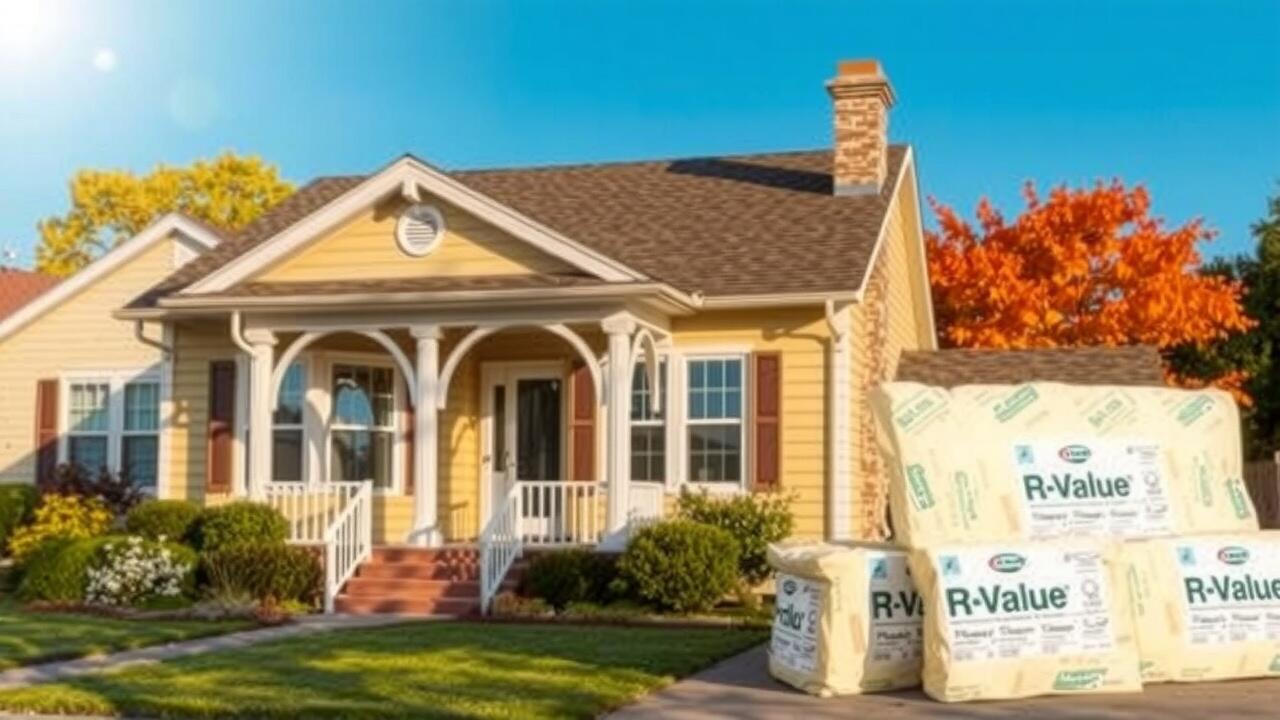
Attic Insulation Requirements
Achieving the best R-Value for Indiana homes begins with adequate attic insulation. The total R-Value recommended for attics in Central Indiana typically falls between R-38 and R-60. This range provides sufficient thermal resistance to combat the region’s seasonal temperature fluctuations. Homeowners should consider using insulation materials that efficiently meet or exceed these R-Values, ensuring optimal energy performance.
Insulation R-Values vary depending on the type and method of installation, making it crucial to select the right materials. Lightweight options like fiberglass batts can offer R-5 per inch, while blown insulation may provide a higher total R-Value due to its ability to fill gaps and voids. Selecting the right insulation type not only enhances comfort levels but also contributes to long-term savings on energy bills in Indiana homes.
Wall Insulation Guidelines
Proper wall insulation plays a critical role in achieving the best R-Value for Indiana homes. Homeowners need to consider insulation materials that effectively minimize heat transfer, ensuring a comfortable living environment year-round. An optimal R-value insulation prevents energy loss, which can lead to higher utility bills. This makes selecting the right wall insulation essential for maintaining energy efficiency.
The R-value affects not only the comfort levels within the home but also the overall energy consumption. For Indiana homes, suggested R-values for walls typically range from R-13 to R-21, depending on specific factors such as climate and home design. Understanding the necessary R-value insulation can help homeowners make informed decisions that balance initial costs with long-term savings on energy expenses.
Common Insulation Materials and Their R-Values
Understanding the various insulation materials and their corresponding R-Values is crucial for selecting the best R-Value for Indiana homes. Fiberglass batts, often rated at R-13 to R-15, are commonly used for walls and can help maintain a cool home by preventing heat loss. Blown fiberglass insulation, which can achieve R-38 to R-60, is ideal for attics, offering exceptional thermal performance. Rigid foam insulation also provides a high R-Value, making it a popular choice for basement walls. By evaluating these options and their R-Values, homeowners can make informed decisions to optimize energy efficiency in their insulation Indiana projects.
Fiberglass Batts and Blown Insulation
Fiberglass batts are a popular insulation choice for achieving the best R-Value for Indiana homes. With a typical R-Value of R-7 to R-8 per inch, these batts provide effective thermal resistance in walls and ceilings. For attics, which require a significantly higher level of insulation, homeowners should aim for R-49 to R-60 to ensure optimal energy efficiency. This level of insulation helps maintain comfortable indoor temperatures throughout the varying seasons experienced in Indiana.
Blown insulation offers flexibility and efficiency, filling gaps and voids that rigid options might miss. It can achieve a similar R-Value range as fiberglass batts, making it another excellent option for enhancing the thermal performance of your home. Both types of insulation contribute to achieving the best R-Value for Indiana homes, providing significant energy savings and comfort when properly installed. Investing in quality insulation ensures long-term benefits that justify the initial costs.
- Provides excellent thermal resistance for energy efficiency.
- Available in various R-Value ratings to meet specific insulation needs.
- Ideal for retrofitting existing homes with hard-to-reach spaces.
- Can help reduce monthly energy bills significantly.
- Easy to install for DIY projects with proper safety measures.
- Offers soundproofing benefits in addition to thermal insulation.
- Environmentally friendly options are available for conscious homeowners.
Spray Foam and Rigid Foam Insulation
Spray foam insulation offers one of the highest R-Values available, making it ideal for homeowners seeking improved energy performance. With a closed-cell design, it can achieve R-Values around R-6 to R-7 per inch, providing exceptional thermal resistance. This material expands on application, filling gaps and creating an airtight seal that significantly increases energy efficiency. Consequently, it is considered among the best R-Value options for Indiana homes.
Rigid foam insulation is another valuable option with impressive thermal resistance ratings. Typically, it achieves R-Value levels of R-4.5 to R-6, making it suitable for both walls and foundations. This type of insulation is durable and moisture-resistant, critical for the variable climate in Indiana. Homeowners looking to maximize their insulation effectiveness should consider these materials, as they contribute to achieving the best R-Value for Indiana homes, ensuring comfort and longevity.
Cost vs. Performance: Evaluating Your Insulation Options
Evaluating insulation options involves a careful balance between initial costs and long-term savings. Homeowners looking for the best R-Value for Indiana homes should consider that many insulation standards suggest at least an R-38 for attics and an R-49 level for new homes. Investing in higher R-Value materials can lead to significant energy savings over time, making the initial expenditures worthwhile. Proper insulation not only enhances energy efficiency but also contributes to overall comfort and reduces heating and cooling costs, offering a compelling reason for homeowners to prioritize their insulation choices.
Initial Investment vs. Long-Term Savings
Investing in insulation with the best R-Value for Indiana homes can lead to significant long-term savings on energy costs. For instance, materials achieving an R-20 rating in attics provide a strong barrier against heat loss, keeping homes warm during harsh winters. While initial costs may be higher for options like spray foam, homeowners benefit from reduced energy bills over time.
Choosing insulation with a lower R-Value, such as R-13 or R-2.9, may save money upfront but can result in higher energy expenses. Homes with better insulation, particularly those achieving U-0.065 metrics, maintain optimal temperatures more effectively throughout the year. Balancing the initial investment with potential savings is crucial in selecting insulation that secures a warm home and enhances comfort for years to come.
| Insulation Type | R-Value | Initial Cost ($ per square foot) | Estimated Annual Savings ($) | Best Use Case |
|---|---|---|---|---|
| Fiberglass Batts | R-13 | 0.50 | 100 | Walls and ceilings |
| Spray Foam | R-20 | 2.00 | 300 | Attics and irregular spaces |
| Cellulose | R-15 | 1.00 | 200 | Walls and attics |
| Mineral Wool | R-15 | 1.50 | 180 | Fire-prone areas |
| Batt Insulation | R-30 | 0.75 | 150 | Attic floors |
Choosing the Right Insulation for Your Budget
Selecting insulation that fits your budget while providing the best R-Value for Indiana homes is crucial for energy efficiency. Comparing various materials can help identify the most cost-effective options. For instance, insulation with an R-Value of R-30 is suitable for attics, while R-38 may be ideal for colder climates. Balancing upfront costs with long-term energy savings ensures that your home remains warm during the harsh Indiana winters.
Evaluating the cheapest R-Value per dollar is essential for making an informed decision. Fiberglass batts often yield an R-Value of about R-2.86 per inch, making them a popular choice among homeowners looking to maximize thermal resistance without overspending. Understanding the value of different insulation types allows you to invest wisely, ensuring your home achieves the best R-Value for Indiana homes while keeping costs manageable.
Benefits of Achieving Optimal R-Value
Achieving the best R-Value for Indiana homes offers significant advantages for homeowners. A targeted R-value, such as R60 for roofing, enhances energy efficiency, resulting in lower heating and cooling costs. By investing in proper insulation, a house maintains a more comfortable temperature year-round, reducing reliance on HVAC systems. This not only leads to immediate energy savings but also increases the home’s overall value. Proper insulation with optimal R-Values contributes to a sustainable living environment, promoting energy conservation and reducing the carbon footprint.

Conclusion
Understanding the best R-Value for Indiana homes is essential for maximizing energy efficiency and comfort. Homes in different regions of Indiana, including northern Indiana, can experience varying climate conditions that influence the optimal R-values needed for superior insulation. Selecting the right insulation materials to achieve these R-values plays a crucial role in reducing energy costs while enhancing the home’s overall performance. By prioritizing the appropriate R-Value for specific areas such as attics and walls, homeowners can make informed choices that lead to significant long-term savings and improved living conditions.
FAQS
What is the best R-value for properly insulating homes in Indiana to keep them warm during winter?
The effective R-value for Indiana homes can vary depending on the type of insulation used. Generally, the R-value refers to the insulation’s ability to resist heat flow. For attic insulation, a recommended R-value is between R-49 to R-60. Additionally, achieving an R-11 to U-0.065 R-13 for walls is beneficial for keeping your home warm and improving energy efficiency.
How does the R-value help determine the effectiveness of attic insulation for homes in Indiana?
The R-value helps homeowners in Indiana assess the effectiveness of their insulation. For attic insulation, a recommended R-value range is between R-49 to R-60, which ensures optimal thermal resistance and energy efficiency.
What are the recommended R-value ranges for attic insulation in Indiana homes?
For homes in Indiana, the recommended attic insulation R-value is typically between R-49 to R-60. This range ensures that the attic insulation effectively maintains the desired indoor temperature and maximizes energy efficiency.
What is the optimal R-value for ceiling insulation in Indiana homes to ensure energy efficiency?
The optimal R-value for ceiling insulation in Indiana homes typically ranges from R-49 to R-60, which helps in achieving better energy efficiency and comfort throughout the year.
What is the recommended R-value range for ceiling insulation in Indiana homes to optimize energy efficiency?
The recommended R-value range for ceiling insulation in Indiana homes is between R-49 to R-60 to ensure maximum energy efficiency.
What R-value range should homeowners in Indiana aim for when insulating their ceilings to ensure optimal energy efficiency?
Homeowners in Indiana should aim for a ceiling insulation R-value of R-49 to R-60 to enhance energy efficiency in their homes.
What R-value should be targeted for ceiling insulation in Indiana homes to achieve maximum energy efficiency?
Homeowners in Indiana should aim for a ceiling R-value in the range of R-49 to R-60 to ensure optimal energy efficiency.
What R-value should be targeted for ceiling insulation in homes located in Indiana to achieve better energy performance?
The recommended R-value for ceiling insulation in Indiana homes is between R-49 to R-60, which helps ensure optimal energy efficiency.
What is the ideal R-value for ceiling insulation in Indiana homes to maximize energy efficiency?
The ideal R-value for ceiling insulation in Indiana homes is typically between R-49 to R-60 to maximize energy efficiency.
What R-value should homeowners in Indiana consider when selecting ceiling insulation to enhance their home’s energy performance?
Homeowners in Indiana should consider a ceiling insulation R-value in the range of R-49 to R-60 to enhance their home’s energy performance.
Comments are closed.