

Most homeowners never think about their insulation until something goes wrong — energy bills climb, a room becomes impossible to heat, or a contractor discovers a problem during a renovation. Understanding how long home insulation lasts is one of the most overlooked aspects of home maintenance, and in Indiana’s demanding climate, the gap between expected and actual insulation performance can cost homeowners hundreds of dollars a year without ever making itself obvious.
The honest answer is that insulation lifespan depends heavily on the material, the installation quality, and what that insulation has been exposed to over the years. Some types can last the lifetime of a home when undisturbed and dry. Others degrade significantly in 20 to 30 years — or even faster if moisture, pests, or physical compression get involved. Here’s what each major insulation type can realistically be expected to deliver, and how to tell when yours has stopped doing its job.
Different Types of Insulation Have Very Different Lifespans
Contents
- 1 Different Types of Insulation Have Very Different Lifespans
- 2 Insulation Lifespan and Insulation Performance Lifespan Are Not the Same Thing
- 3 What Causes Home Insulation to Fail Before Its Expected Lifespan?
- 4 Indiana’s Climate Creates Specific Insulation Durability Challenges
- 5 How Do You Know When It’s Time to Replace Your Home’s Insulation?
- 6 Frequently Asked Questions About Insulation Lifespan
- 6.1 Does old insulation need to be removed before adding new insulation?
- 6.2 How long does spray foam insulation last compared to fiberglass?
- 6.3 Can insulation lose R-value without any visible damage?
- 6.4 How often should Indiana homeowners have their insulation inspected?
- 6.5 Does Homeward Insulation replace old or damaged insulation, or only add new insulation?
- 7 The Insulation That Was Enough in 1985 Is Not Enough Today
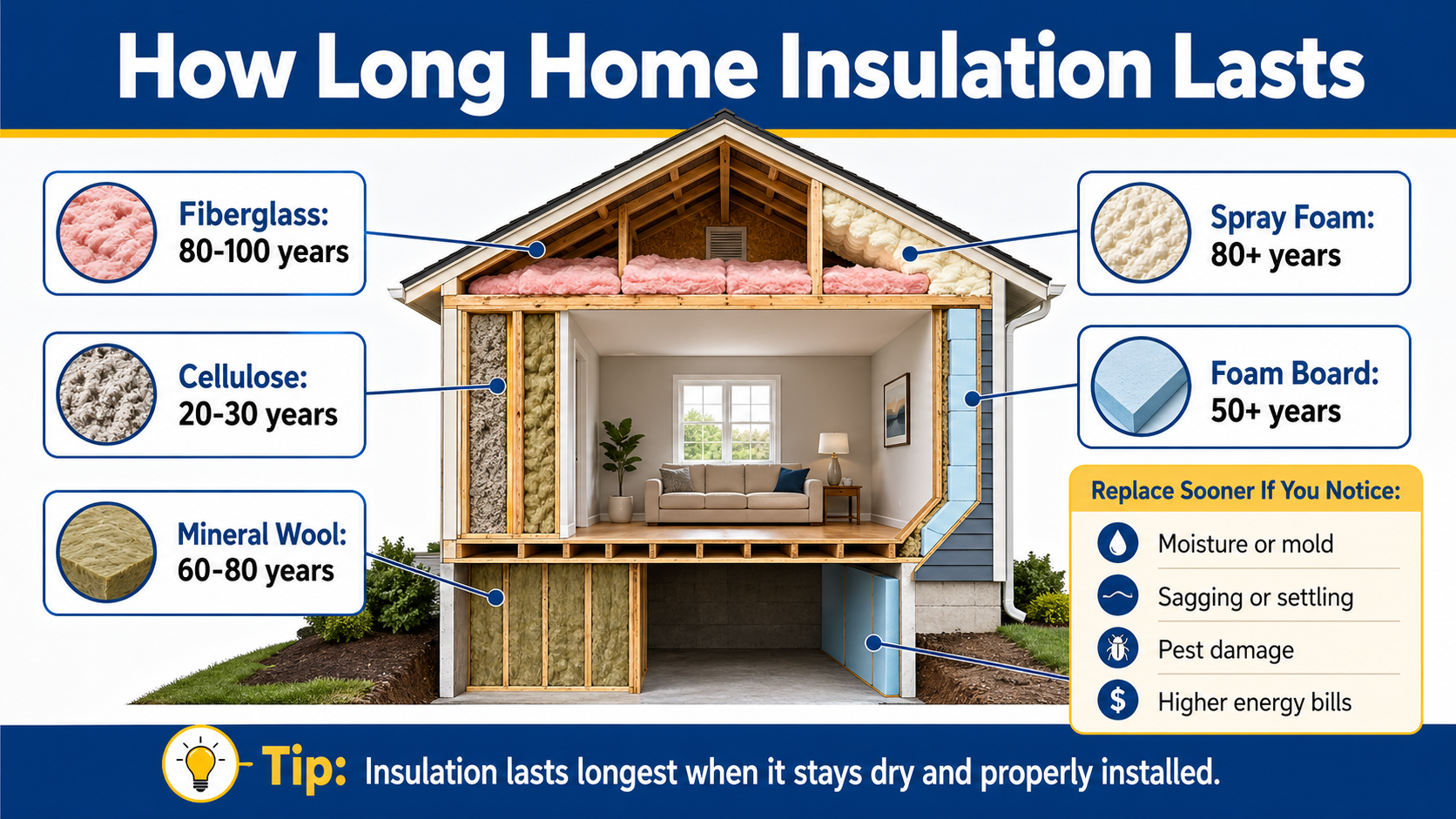
There is no single answer to how long insulation lasts because the material makes an enormous difference. The most common types used in Indiana homes span a wide range — from materials that remain effective for a century when properly installed, to options that begin losing performance within a couple of decades under normal conditions.
Fiberglass Batt and Rolled Insulation
Fiberglass batts are the pink or yellow rolls most people picture when they think of insulation. When installed correctly in a dry, undisturbed environment, fiberglass batt insulation can last 80 to 100 years without significant degradation. The glass fibers themselves don’t break down, rot, or absorb moisture. The main threats to fiberglass batt performance are physical compression — from items stored on top of it in an attic — and moisture infiltration, which causes batts to sag, clump, and lose their thermal resistance.
Blown-In Fiberglass Insulation
Loose-fill fiberglass blown into attics and wall cavities carries a similarly long potential lifespan of 80 to 100 years under ideal conditions. Because it’s installed as loose material rather than a compressed batt, it’s somewhat more resilient to physical damage. However, blown-in fiberglass can settle slightly over time, gradually reducing its depth and effective R-value — which is why periodic attic checks are worthwhile even for homes with relatively new insulation.
Blown-In Cellulose Insulation
Cellulose — made from recycled paper products treated with fire retardants — is an effective and environmentally friendly insulation option, but it has a notably shorter expected lifespan than fiberglass. Under normal conditions, blown-in cellulose performs well for 20 to 30 years, after which settling and natural degradation of the material can reduce its effectiveness. In humid climates or homes with any moisture issues, cellulose can deteriorate faster. Cellulose is also more attractive to pests than fiberglass, which can accelerate damage in homes with rodent activity.
Spray Foam Insulation
Both open-cell and closed-cell spray foam are among the longest-lasting insulation options available, with expected lifespans of 80 years or more — and many manufacturers rate their products as lasting the lifetime of the structure. Spray foam adheres directly to surfaces and doesn’t settle, shift, or compress. Closed-cell spray foam also acts as a vapor barrier, making it particularly well-suited to moisture-prone areas like rim joists, crawl spaces, and basement walls in Indiana’s humid summers. The main vulnerability of spray foam is UV exposure over time, which is why it should always be covered or protected when installed in areas with sunlight exposure.
Batt and Rolled Mineral Wool (Rock Wool)
Mineral wool — also known as rock wool or slag wool — is a dense, fire-resistant insulation material with excellent thermal and acoustic performance. Like fiberglass, mineral wool batts have a potential lifespan of 80 to 100 years when kept dry and undisturbed. Mineral wool doesn’t absorb moisture and is naturally resistant to mold, making it a durable choice for areas with moderate humidity exposure.
Radiant Barrier Insulation
Radiant barriers work differently from thermal insulation — instead of resisting heat conduction, they reflect radiant heat. The reflective foil material itself can last for decades, but dust accumulation on the reflective surface significantly reduces effectiveness over time, typically within 10 to 25 years depending on attic conditions. In dusty attic environments, radiant barriers may need cleaning or replacement to maintain their performance benefit.
Insulation Lifespan and Insulation Performance Lifespan Are Not the Same Thing
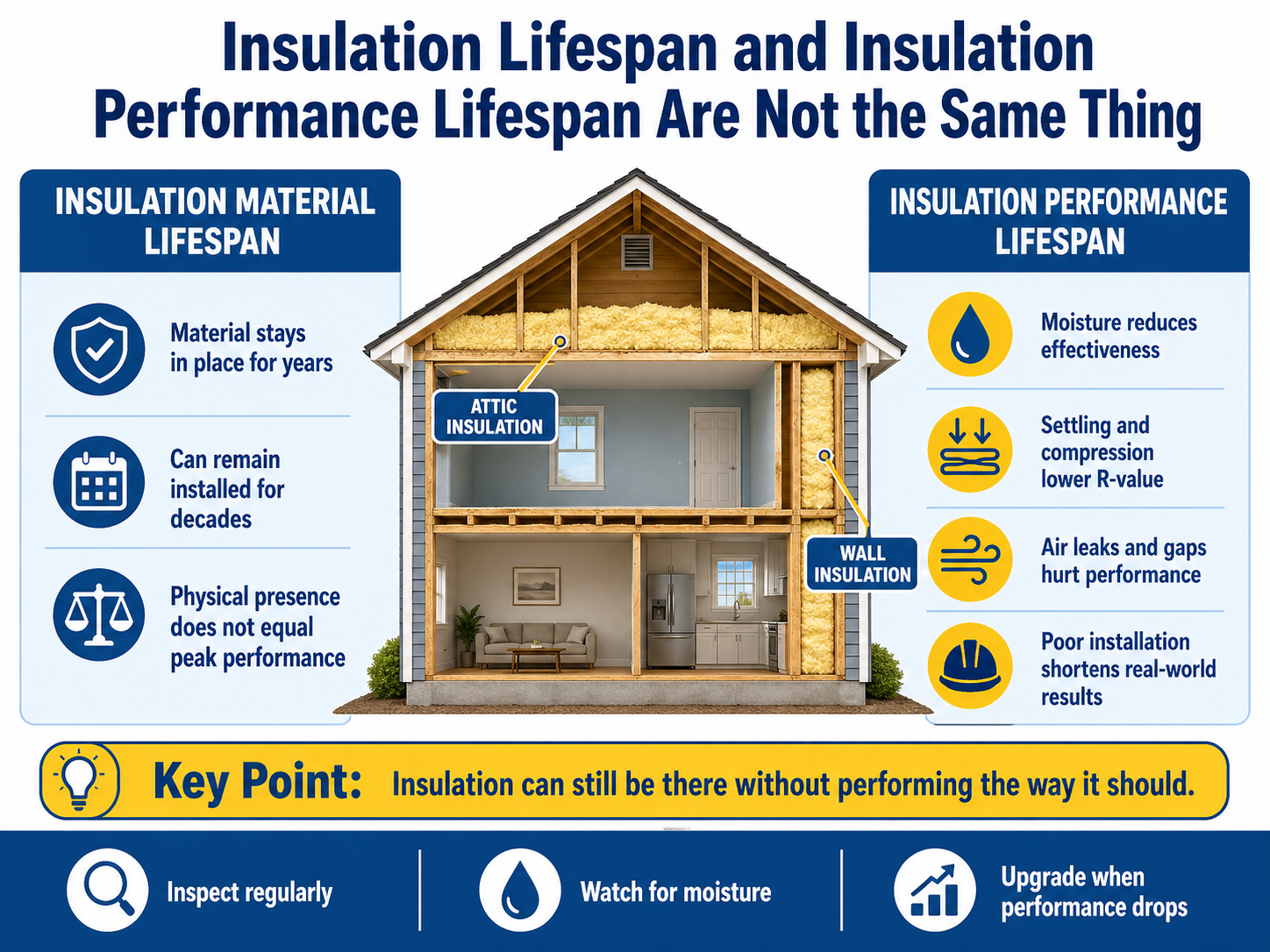
This is the distinction that catches most homeowners off guard. An insulation material can still be physically present — still visible in the attic, still filling the wall cavity — long after it has stopped performing at its original R-value. Physical durability and thermal performance are two different metrics, and the second one is what actually determines whether your home is energy-efficient.
Several factors cause insulation to lose its thermal effectiveness well before it physically deteriorates:
- Settling: Blown-in materials — especially cellulose — compact over time under their own weight. A depth that originally delivered R-38 may settle to R-30 or lower after 15 to 20 years, even without any visible damage.
- Compression: Batt insulation that gets compressed — from items stacked on it in an attic, from foot traffic, or from improper installation — loses R-value proportionally. Compressed fiberglass doesn’t spring back to its original thickness.
- Moisture damage: Wet insulation loses most of its thermal resistance immediately and may not recover even after drying. Fiberglass that has been wetted and dried repeatedly often retains less than half its original R-value.
- Air movement: Insulation that isn’t paired with proper air sealing allows convective heat transfer through and around it, significantly undermining its effective R-value regardless of the material’s nominal rating.
- Gaps and voids: Original installation quality matters enormously. Batts installed with gaps, compression points, or misaligned edges can perform 20 to 30 percent below their labeled R-value from day one.
What Causes Home Insulation to Fail Before Its Expected Lifespan?
Beyond normal aging, several specific conditions can cause insulation to fail prematurely — and many of them are more common in Indiana homes than homeowners realize.
Moisture and Water Intrusion
Water is the single most destructive force for insulation performance. Roof leaks, plumbing leaks, condensation from improper vapor barriers, and high humidity levels in poorly ventilated attics or crawl spaces can all introduce moisture into insulation. Once wet, fiberglass loses its thermal resistance immediately, and cellulose can begin to compact and mold. Even after the moisture source is addressed, insulation that has been heavily saturated often needs to be replaced entirely rather than dried out and reused.
Pest Infestation
Rodents and insects can cause surprisingly extensive damage to attic and wall insulation. Mice and squirrels nest in batt insulation, compressing and displacing it while also contaminating it with waste. Some insects, particularly certain ant species, tunnel through foam insulation. If you’ve had any pest activity in your attic or crawl space, having the insulation inspected for damage is worthwhile regardless of its age.
Attic Storage
Using the attic floor as storage space is one of the most common ways homeowners unknowingly degrade their insulation. Walking on blown-in insulation compresses it; stacking boxes or bins on top of batts flattens them permanently. In older Indianapolis homes where attic access is convenient, years of storage can reduce effective R-values substantially.
Poor Original Installation
Insulation installed without attention to air sealing, proper coverage at edges and penetrations, or correct depth never performs at its rated value — and those gaps don’t improve with age. Homes built in the 1970s and 1980s were often insulated to the code minimums of the time, which are dramatically lower than current Zone 5 recommendations, and may have installation quality issues that compound the problem.
Indiana’s Climate Creates Specific Insulation Durability Challenges
Indiana’s Climate Zone 5 designation means insulation here faces conditions that accelerate wear in ways that milder climates don’t. Understanding these local factors helps explain why periodic insulation assessments are particularly worthwhile for Indianapolis-area homeowners.
- Humidity cycles: Indiana summers bring sustained high humidity that creates condensation risks in attics and crawl spaces, particularly when vapor barriers or ventilation are inadequate. Repeated moisture exposure degrades cellulose faster and can introduce mold into fiberglass insulation over time.
- Freeze-thaw cycling: Indiana winters involve repeated cycles of freezing and thawing that stress building materials and can open small gaps in framing and sheathing. These gaps allow cold air to bypass wall insulation, reducing its effective thermal performance.
- Extreme attic temperatures: In summer, Indiana attic temperatures can exceed 150°F. Over many years, sustained extreme heat can cause some insulation materials — particularly older fiberglass batts with degraded binders — to become brittle and lose their loft.
- Ice dams: Ice dams along roof edges are a direct sign of attic heat loss, which means insulation is allowing warm air to escape through the roof deck. Homes that experience recurring ice dams almost always have attic insulation that has settled, degraded, or was never adequate to begin with.
How Do You Know When It’s Time to Replace Your Home’s Insulation?
There’s no universal expiration date for insulation, but there are reliable indicators that your home’s insulation deserves a closer look — regardless of how old it is.
- Your home was built before 1990 and the attic insulation has never been assessed or upgraded
- Energy bills have increased steadily without a clear change in usage or utility rates
- Certain rooms are consistently harder to heat or cool than others
- You’ve had any roof leak, plumbing leak, or flooding that may have contacted insulation
- There has been rodent or pest activity in the attic or crawl space
- Attic insulation is visibly thin, compressed, or below the top of the floor joists
- You notice ice dams forming on your roof in winter
- A renovation has exposed wall cavities that appear empty, thin, or damaged
At Homeward Insulation, we assess the current condition and effective R-value of your existing insulation — not just whether something is present. That distinction matters, because insulation that looks intact from a distance may be performing well below its original rating. A professional assessment gives you a clear picture of what you actually have and what an upgrade would realistically deliver.
Frequently Asked Questions About Insulation Lifespan
Does old insulation need to be removed before adding new insulation?
Not always. In most attic applications, new blown-in insulation can be added directly over existing insulation in good condition — the layers combine to increase total R-value without removing the original material. However, if the existing insulation has been damaged by moisture, pests, or mold, it typically needs to be removed and replaced rather than covered over. Adding new insulation on top of compromised material traps the damage and doesn’t solve the underlying problem.
How long does spray foam insulation last compared to fiberglass?
Both closed-cell and open-cell spray foam are rated to last the lifetime of the structure — 80 years or more — when properly installed and protected from UV exposure. This makes spray foam one of the most durable insulation options available, particularly for areas like rim joists, crawl space walls, and attic roof decks where longevity and air sealing are both priorities. Fiberglass batt and blown-in fiberglass also have long potential lifespans, but are more susceptible to physical damage and moisture than spray foam.
Can insulation lose R-value without any visible damage?
Yes — and this is one of the most important things for homeowners to understand. Blown-in cellulose settles gradually over time, reducing its depth and effective R-value without any sign of damage. Fiberglass batts that have been mildly compressed retain less R-value than their label suggests. Air movement through gaps in the building envelope can bypass insulation entirely without disturbing the material itself. Visual inspection alone is not a reliable way to assess insulation performance.
How often should Indiana homeowners have their insulation inspected?
A general rule of thumb is to have your attic insulation assessed every 10 to 15 years, or immediately after any event that may have introduced moisture — a roof leak, a plumbing failure, or significant ice dam activity. Homes built before 1990 that have never had an insulation upgrade are strong candidates for an assessment regardless of the timeline, since they were almost certainly built below current Zone 5 recommendations and have had decades for any original insulation to settle and degrade.
Does Homeward Insulation replace old or damaged insulation, or only add new insulation?
Homeward Insulation handles both removal and installation. When existing insulation is damaged, contaminated, or simply too degraded to be worth keeping, we remove it and install fresh material to current R-value standards. When existing insulation is in good condition but below target depth, we add new blown-in or batt insulation on top. The right approach depends on what we find during the assessment — and we’ll walk you through the recommendation before any work begins.
The Insulation That Was Enough in 1985 Is Not Enough Today
Most Indiana homes that haven’t had an insulation upgrade in the last 20 to 30 years are running below current efficiency standards — either because the original installation was built to older code minimums, because the material has settled and degraded, or both. The longer that gap goes unaddressed, the more it costs in energy every year.
Homeward Insulation works with Indianapolis-area homeowners to assess what’s actually in their attics, walls, and crawl spaces — and to recommend practical, cost-effective upgrades that bring homes up to current Zone 5 performance standards. Whether your insulation is 10 years old or 40, we’ll give you an honest picture of where you stand. Fill out our free estimate form online to schedule your assessment and find out what your home’s insulation is actually delivering.
Comments are closed.